
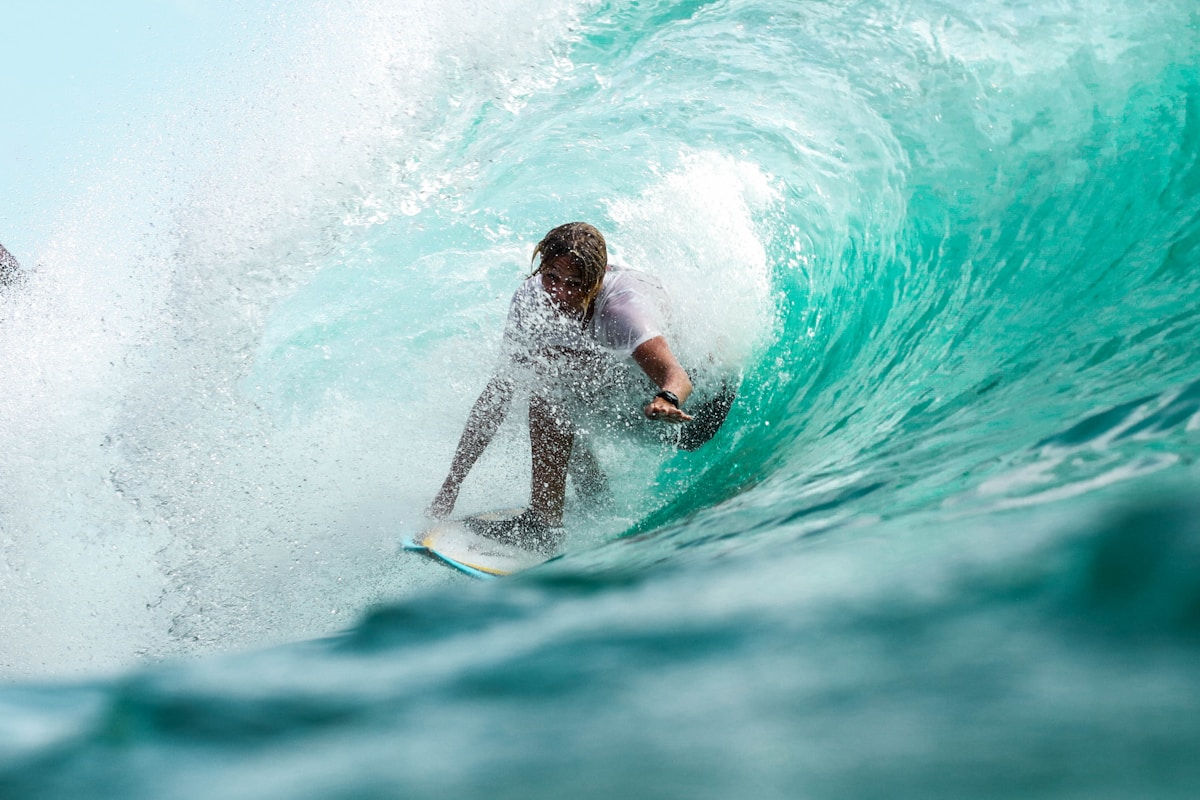
Winter surfing in Biarritz is a discipline in its own right. The waves are bigger, more powerful, more consistent than in summer. The water is colder — between 12 and 14 degrees from November to March. And the beach, emptied of holidaymakers, belongs to a handful of local surfers who know every break by heart.
The wetsuit: don’t cut corners
A 4/3 mm wetsuit is the minimum for comfortable winter surfing on the Basque Coast. Many locals switch to a 5/4 mm from January onwards. Accessories are just as important as the suit itself: booties (3 mm minimum), gloves (2 mm), hood in strong winds.
Don’t compromise on quality. A good suit that keeps you warm lets you surf for 2 hours without trouble. A cheap suit that lets water in makes the experience miserable after 40 minutes.
Spots by level
La Côte des Basques remains the most accessible spot — the wave is longer and less powerful than at Grande Plage. Grande Plage in winter can produce larger waves, reserved for experienced surfers. Locals also know secondary spots less exposed to the wind, accessible only with knowledge of the area.
Reading the surf forecast
Surf-Report, Windguru and Magic Seaweed are the three reference tools for anticipating conditions. In winter, the best windows generally arrive 24 to 48 hours after an Atlantic depression passes, when the swell remains but the wind drops. These “windows” sometimes last less than a day — which is why it is essential to monitor forecasts regularly.
Clubs and lessons in winter
Several Biarritz surf clubs and schools offer lessons and guided sessions in winter. Surfing with a local instructor in winter is particularly worthwhile: groups are smaller, sessions are longer, and knowledge of the spots is shared freely.