
Interview conducted by Marc Lestang for ICI Biarritz
Daniel Sparza, political strategy advisor — a career that favours the wings over the spotlight.
Naturally discreet, more accustomed to backstage work than to the limelight, Daniel Sparza nevertheless agreed to our request for an interview. A political advisor with a French and international background after a long career within local, national and international political institutions, with family roots in Navarre, he led the campaign of one of the major lists in the latest Biarritz municipal elections, and there he found far more than a mission ground — choosing to become personally involved out of conviction. A territory, a team, perhaps a base for what comes next. He now splits his time between Paris and the Basque Coast, where he is building, step by step, the local foothold of his group, YES Partner, with the support of a Basque team and Basque expertise. An interview.
Foreword
He’s rarely seen around. And when he is, he’s rarely at the forefront.
The surname already says something to any attentive Basque ear: Sparza, a variant of Esparza, a toponym from Navarre. That is probably why Daniel Sparza, political strategy advisor with a French, European and international career, found his footing on the Basque Coast so quickly. He was first spotted backstage, campaign headset firmly on, orchestrating rallies, talking points and shoots throughout the neighbourhoods of Biarritz. Without ever seeking to appear.
A few months later, he is still here — no longer in activist campaign mode, but in a project of taking root. The founder of “YES Partner Public Affairs,” a consultancy in political strategy, influence communication and complex operations support, won over by Biarritz, makes the deliberate choice of the Basque Coast as his second base, with the ambition of turning it, in time, into his operational home port.
He receives us between two TGV trains, lucid about the state of the country, attached to the Basque tempo, and convinced that there is, here, “a political and economic story to be written out loud, without complex.” The exercise of the interview, he acknowledges, is unfamiliar to him.
My job is more about listening and advising. Not speaking.
The interview
ML — Daniel Sparza, you come from a world that Biarritz residents barely know: that of political advisors who work in the shadow of elected officials’ and executives’ campaigns. How do you define your profession?
D.S. — My profession, which stems from my long experience in consultancies and national companies, consists in transforming a political intuition into a winning trajectory. It involves three things: deeply understanding a territory or a market, structuring a narrative that brings people together, and organising the human, media and operational resources for that narrative to translate into results. I have practised this profession in France, in Europe and on several international stages, for candidates, elected officials, business leaders, and sometimes institutions. The common denominator is always the same question: what makes a collective project, at a given moment, cross the threshold of credibility?
For fifteen years he has thus accompanied elected officials, executives and organisations, in France and abroad, while remaining active in the world of political consultancies. Always according to the same rules: discretion, proximity, complicity. Difficult to sum up in a formula, his activity stands at the border of several worlds: political, economic, institutional.
I essentially intervene when there is a need to advise, organise, structure, clarify, sometimes to defuse, but also to put back in order things that are no longer in order in the framework of restructurings.
ML — You led the campaign of one of the major lists in the latest Biarritz municipal elections. What do you take away from that experience?
D.S. — It was deliberately a shared campaign management, as it was important that a second campaign director, rooted in this Basque land and accustomed to the local political world, should bring his insight and his field experience; this two-headed partnership with Francis Courouau and this collaboration proved very effective. I take away, first, the political maturity of the people of Biarritz, which makes it almost a textbook case. Here, people do not vote out of laziness or habit. The people of Biarritz read the platforms, cross-check sources, compare. It is demanding for a strategist and profoundly healthy for democracy. I take away, next, the singularity of the local fabric: Biarritz is not a resort town, as people often caricature it — it’s a city, a real one, with its neighbourhoods, its generations, its fractures. Too many Parisian observers, out of sheer ignorance, reduce it to its postcard image. I take away, finally, that the issues that structured the campaign — housing, tourist pressure, economic transition, the future of a Basque Country questioning itself — will impose themselves on every municipal team for the decade to come.
He pauses. Something, in that campaign, has clearly marked him — and one can sense him weighing his words before returning to the subject.
“It was, from the very start, a personal commitment, born of the happy chance of a meeting, with the complicity of a Biarritz friend who knew my intentions of getting involved in this city that I loved and had known for some years already. A revealing encounter with a candidate of talent, Jean-Baptiste Dussaussois Larralde, destined for a great political future, whom I have now chosen to accompany and with whom I share many values and much complicity. And a meeting, also, with a team rather rare in a campaign: sincere, committed people from Biarritz, with Biarritz lodged in their hearts, very far from any logic of personal interest — too often the case — and who now form my chosen family.”
They are the ones who made me stay. And, in a way, who adopted me.
ML — Your name, Sparza, sounds Basque. What is your family history with this territory?
D.S. — The surname comes from Navarre. It is an old root, passed down without fanfare, as is often the case in those families where one spoke little but where one knew where one came from. I claim to be neither euskaldun nor a “pure Basque” — that would be dishonest, I don’t speak the language. But there is a civilisational heritage that I carry unconsciously: a certain relationship with work, with the given word, with the collective, with discretion too. These are values passed down in part by my father, from whom I hold this lineage, that I rediscover here, in Biarritz, and that make this territory feel familiar without my ever having had to learn it.
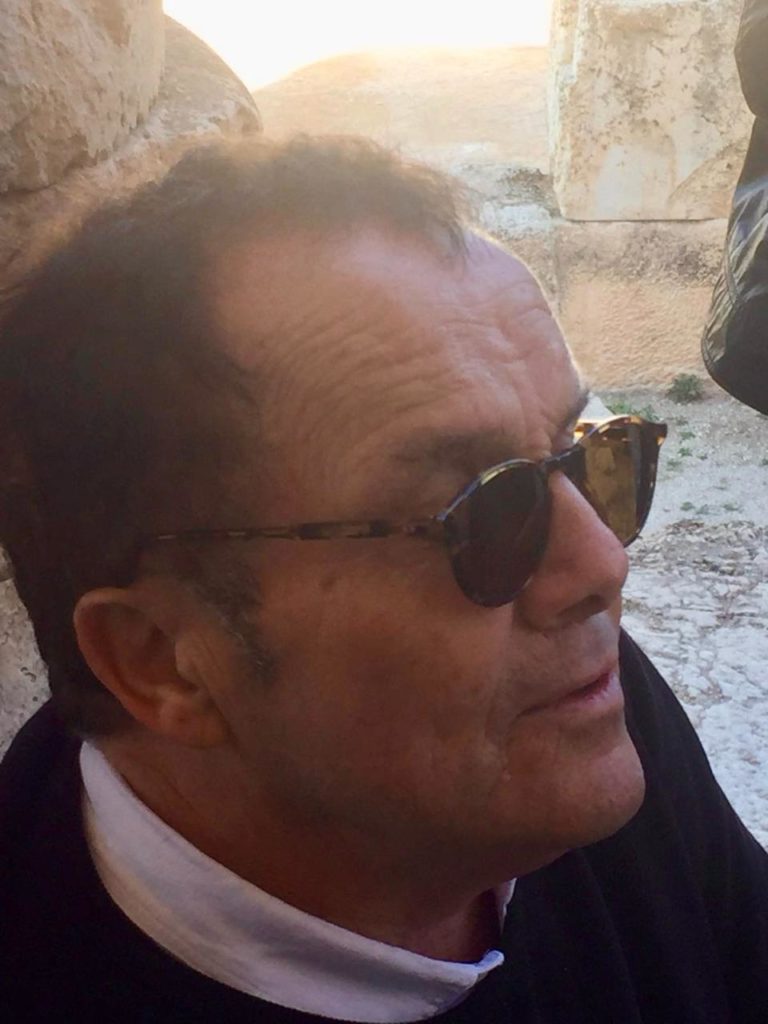
ML — You have sometimes been described as a “Parisian come down to campaign.” Does this Navarrese root change your reading of the Basque Country?
D.S. — Paris welcomed me at one point in my life, as the Basque Country does today; does that make me a Parisian? I’m not so sure. On the other hand, this Navarrese root protects me above all from a common failing among consultants from Paris: projecting onto the Basque Country analytical grids designed for mainland France. When one has Navarrese origins, one knows that this territory is not a periphery — it is a centre, with its historical depth, its own economic circuits, its relationship with the cross-border and with Europe that is not an extra layer of soul but a daily reality. That spares me condescension, which is the worst flaw of my profession. That said, I don’t instrumentalise this root. My involvement in this recent campaign, I repeat, stems from a friendship and from genuine activist conviction, on the same footing and under the same conditions as that of each member of the wonderful team into which I have melted. But for people to trust me here, I had to say it clearly, once and for all. Even if this exercise breaks with my traditional reserve, it is also one of the reasons that leads me to accept your request for an interview.
In a territory where belonging is built over time, caution is no mere posture. Daniel Sparza doesn’t make an argument of it, and with great humility acknowledges that he draws daily from the contribution of the team in its richness and its diversity.
I stay in my place. I feed myself daily on the team’s contribution.
ML — How do you analyse, politically, the moment Biarritz is going through?
D.S. — Biarritz is at a turning point. The city enjoys exceptional attractiveness, and it is a very beautiful city that one loves, but that attractiveness has become, in part, its problem. When the price per square metre disconnects local working people from the market, when neighbourhood shops give way to tourist mono-product, when the young graduates of the Basque Country end up working in Bordeaux or in Toulouse because they find neither housing nor mission here — you have right there the ingredients of a silent unravelling. The answer is not ideological, it is operational: it takes an assumed housing policy, courageous economic diversification, and stronger coordination between the city, the conurbation and the region.
ML — Your view on the Basque economy, beyond tourism?
D.S. — The Basque Country has assets that are largely underestimated in Paris: a solid industrial fabric inland, excellence sectors in aeronautics, surf business, quality agri-food, and an innovation capacity carried by entrepreneurs deeply attached to their territory. Add to that the depth of the Iberian market an hour’s drive away, and you have a competitive advantage that few French regions can claim. The challenge is not to create an economy ex nihilo — it is to better connect what already exists: capital, training, research, market. That is exactly the kind of value chains I enjoy working on.
ML — On the major institutional debates — special-status authority, Basque euro-region, deepening of decentralisation — where do you stand?
D.S. — Forgive my frankness: it is not for me to speak about it publicly. I am not an elected official and I have no wish to use this family root to grant myself an institutional legitimacy I do not have. These debates belong to the Basques themselves, to their elected officials, to their activists, to their citizens. My role, as a consultant, is rather to attend to what already works: economic value chains, the quality of public communication, the readability of projects. My analysis, my advice, remain within the private sphere of my activities. I am keen not to confuse it with a public position. Discretion, here too, is a Basque value.
ML — Why have you chosen Biarritz for the extension of your activity, and not a more obvious hub such as Bordeaux or Bayonne?
D.S. — Bordeaux is a great metropolis, perfect for those seeking volume — which is not my case. Biarritz, and more broadly the BAB area, offers something rarer: an international scene on a human scale. In the same week, you’ll cross paths with Spanish executives, American funds, Parisian elected officials on the move, local entrepreneurs who carry real weight. It is a dense influence ecosystem, without the hierarchical distance of the capital. For a consultancy that works at the intersection of the political, the economic and the institutional, it is ideal ground. For a man who has fallen for Biarritz, it is essential. And the proximity of Spain, for someone with ties to Navarre, is no minor detail.
One must, here, step down a notch. Step out of the profession for a moment. Daniel Sparza has settled by the ocean, and he doesn’t hide it — that too is why he stayed, he confided to us.
“The sea is my passion, it’s the first thing I see in the morning and it’s a happiness renewed every day.” He smiles. Some of my seafaring ancestors have left me a few traces. “It’s good sometimes to be near the sea — it’s a good reminder. Sometimes calm, sometimes rough, unpredictable, but always there.” An image he draws, almost naturally, towards the political world: “Soft, welcoming, sometimes wild, sometimes tempestuous… but always beautiful.”
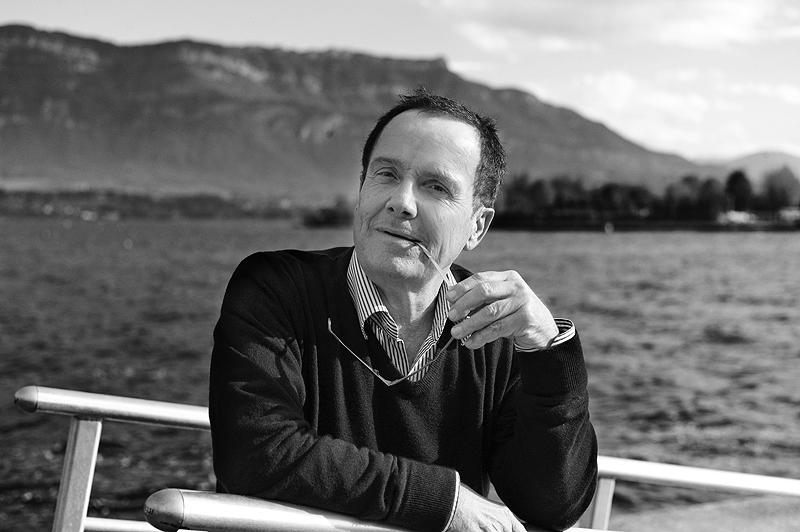
A way, true to his style, of saying things without overplaying them.
ML — Concretely, how is YES Partner organised between Paris and Biarritz?
D.S. — Today, I continue to run my French and international assignments from Paris, because that is where part of our clients and partners are. But we have started to structure a local team here, with the arrival, in particular, of Caroline Labenne in communications, whose skills I came to appreciate during this campaign. Caroline brings a fine knowledge of the Basque fabric, a precious editorial capacity, and a network no Parisian consultant can pretend to reproduce. In time, the objective is clear: to make the Basque Country the operational base of YES Partner. I will continue to carry out our assignments in Paris, in Brussels and abroad, but the consultancy’s centre of gravity will have gradually shifted here.
No thunderous announcement, no communications stunt. A logic of quiet anchoring, true to his method.
If you want to be useful here, you have to work with people from here.
ML — So you embrace a territorial stance in a profession often criticised for its Parisian disconnect?
D.S. — Yes, and I believe it is a strength, not a weakness. The best political and economic strategies I have seen work were always anchored in a real territory, with its people, its constraints, its imaginaries. Working from Biarritz means forcing oneself to keep one’s feet in the real world. And let’s be honest: the Parisian concentration of strategy consulting is a collective impoverishment. If a few consultancies decide to settle durably in our regions, the country will be the better for it.
ML — On the place of consultants in local democracy, precisely: how do you reply to those who see in you, and in your peers, “technocrats of the shadows”?
D.S. — I reply that the profession must explain itself. A political strategy advisor does not write the platform in place of the candidate, does not define a corporate strategy in place of its executive; just as alongside elected officials and leaders, he helps to clarify choices, to prioritise, to avoid gross mistakes and traps. The danger is not expertise — it is opacity. For my part, I am in favour of more transparency about who advises whom, in what capacity, and at what cost. It is a democratic requirement, and I believe the profession has everything to gain from it.
ML — Three words to conclude: your vision for Biarritz and the Basque Country in five years?
D.S. — Sovereign, open, lucid. Sovereign, because a territory that no longer controls its land, its energy and its workforce is no longer free of its destiny. Open, because isolation is always a trap, and because the cross-border vocation of the Basque Country is an immense asset. Lucid, because we will not have the luxury of approximation in the face of the climate, demographic and geopolitical challenges ahead. If I can contribute modestly, from this corner of the coast where a part of my Navarrese roots finally finds a fixed address, I will have done my share.
Afterword
The interview comes to an end. The man, for his part, already seems ready to return to discretion. But before closing the parenthesis, he specifies what, at heart, truly guides his choices.
All my life, I have always chosen people over structures. Projects over labels. One works well when one knows why — and above all, with whom.
Biarritz, within that logic, is not a point of arrival but a point of anchorage. “It’s a place where one can settle… and depart again. Today, you can reach the entire world from here.” A base, then. But a base chosen.
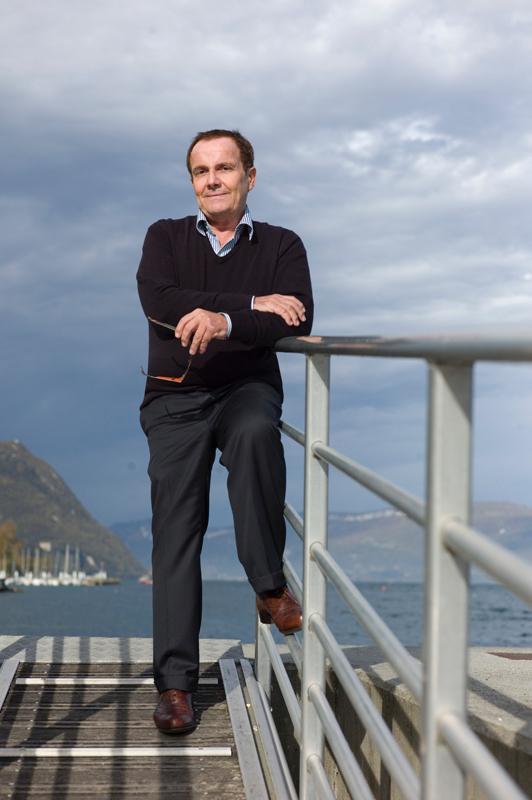
Who is Daniel Sparza?
A specialist in political strategy and organisation and close advisor to elected officials and executives, Daniel Sparza has built his experience between Paris, Brussels and several foreign capitals, intervening on deep political structurings and restructurings, electoral campaigns, as well as on operations of economic and institutional influence. He claims an attachment to the Basque Country on the civilisational level — the work ethic, the given word, the sense of the collective and of discretion.
Founder of the consultancy YES Partner, he today puts his experience and expertise at the service of elected officials, entrepreneurs and institutions. As director of one of the principal lists’ campaign in the latest Biarritz municipal elections, he has made the Basque Coast his second base and is preparing, in the medium term, the implantation of his operational headquarters in the Basque Country. The local team will gradually expand, the people of YES Partner having mobility in their genes by nature.
Daniel Sparza now splits his week between the capital and Biarritz — a geography which, he says, “looks like what a public-affairs consultancy ought to be: rooted somewhere, useful everywhere.”
An approach founded, in short, on confidentiality, method, efficiency — and above all, as we were able to observe throughout this interview, on the passion that drives him.
Interview conducted for ICI Biarritz.
Marc Lestang
Documentation
YES PARTNER website: https://yespartner.fr