

ICI BIARRITZ · Culture & live performance
Serge Istèque, the man who keeps memory alive
Zilbor — Ici Biarritz · 27 May 2026
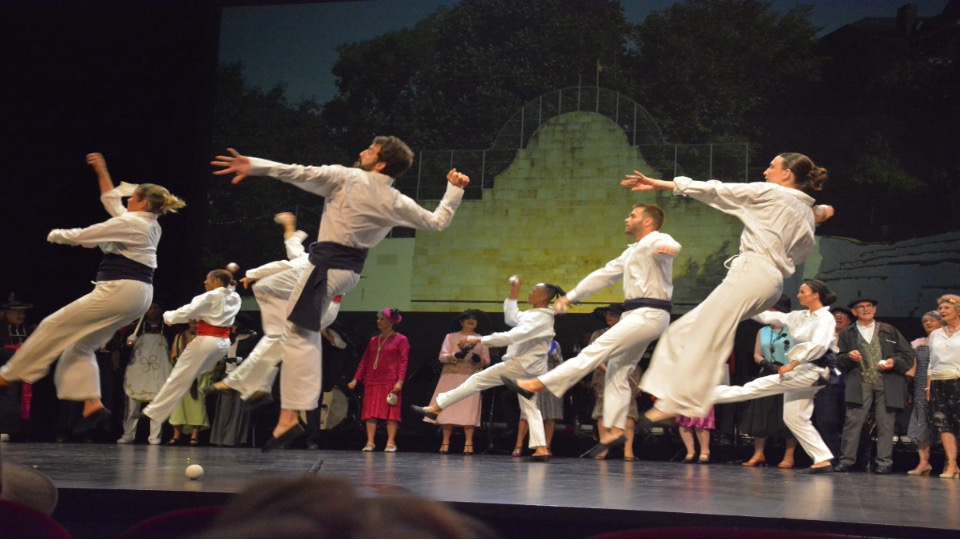
There are shows that catch you off guard. You walk into the Gare du Midi on a Monday afternoon, expecting something good, and you leave with something in your throat you hadn’t planned to find there. Serge Istèque’s Papa Pourquoi ? Aïta Zendako ? is one of them.
On 25 May, at 4 pm, the hall was full. Not half full — full. And that evening, a second performance filled the rows all over again. The audience stopped checking the time. The silence was one of listening — not of politeness. The room rose to its feet.
From Baïgorry to the Gare du Midi

To understand this show, you first have to understand the man behind it — its author, its director, its driving force. Serge Istèque is not a theatre man by training. Born in Baïgorry, in the valley, far from the spotlights — a former dancer with the Basque ballet company Oldarra, he has always carried the territory in his body. He learned sport from his parents and the environment as something self-evident: he launched the region’s first environmental classes, the Aquitaine/Navarre and Aquitaine/Euskadi exchange programmes, and was involved in running the Bidarray mountain refuges within Auñamendi. It was only in 2005 that he came down to the coast and opened a bar in Biarritz, the Bo Bars on rue Gambetta. An address, a crossroads of encounters.
Then, in 2015, he made a bet that might have seemed crazy: to create a street festival in Biarritz built around the Roaring Twenties. The idea? To give Biarritz back a strong identity event, the way Bayonne has its fêtes, Venice has its carnival, Pamplona has the San Fermin. The first edition drew 500 participants and 60,000 spectators. You don’t make that up.
From that festival was born the musical. From the street to the stage, it’s the same gesture: to make the city and its forgotten stories vibrate.
What the show says, and how it says it
Papa Pourquoi ? Aïta Zendako ? — the question is double, in French and in Basque, and it carries within it all the tension of the show. Why leave? Why stay? Why has the Basque Country lost so many of its own to emigration, and why does it today attract so many newcomers?
The context Istèque sets out is simple and striking: in 1925, the Basses-Pyrénées counted 185,000 inhabitants where the Basque Country urban area today brings together 325,000. This is not a demographer’s figure — it’s a vertigo. And it is this vertigo that the show stages, with real facts, characters rooted in the territory, languages intermingled: French and Euskara live side by side on stage as they do in the street.
“I want to share the soul of this territory of memory, Herria, the country that inhabits and shelters us today. I am inventing nothing in saying this, since in the Basque language, people and country are interpreted in a single name: Herria.”
Serge Istèque, director’s note
On stage, around a hundred actors, musicians, dancers, performers. Not professionals recruited from a Parisian drama school: people from here. The grandchildren of the Marquis d’Arcangues. Figures from Baïgorri, Helette, Pagolle, Cambo, Itxassou. The Hélette sappers. Gaiteros. Faces you recognise, accents you’ve heard at the markets, the village fêtes, the pelota courts.
That’s where the genius of the thing lies. Istèque doesn’t make a show about the Basque Country. He makes a show with the Basque Country. The difference is total. The stage is not a folkloric set — it’s a community representing itself, telling its own dramas in its own voices. The emotion that results is not the kind produced by fine staging. It’s a deeper one, that of recognition: these people, that’s us.
A show that delivers on its promises
The professionalism of the ensemble is real — and that is one of the hardest bets to win with a cast this large and this amateur. Istèque has managed to turn collective energy into stage coherence. The direction knows when to tighten, when to let go, when to let a single voice carry the silence of the hall.
The memorial ambition holds. You enter this show vaguely knowing that the Basque Country has a history. You leave it with faces, names, scenes that stick. That’s what theatre does best when it remembers its first function: to pass on what history books cannot.
After Biarritz, what comes next
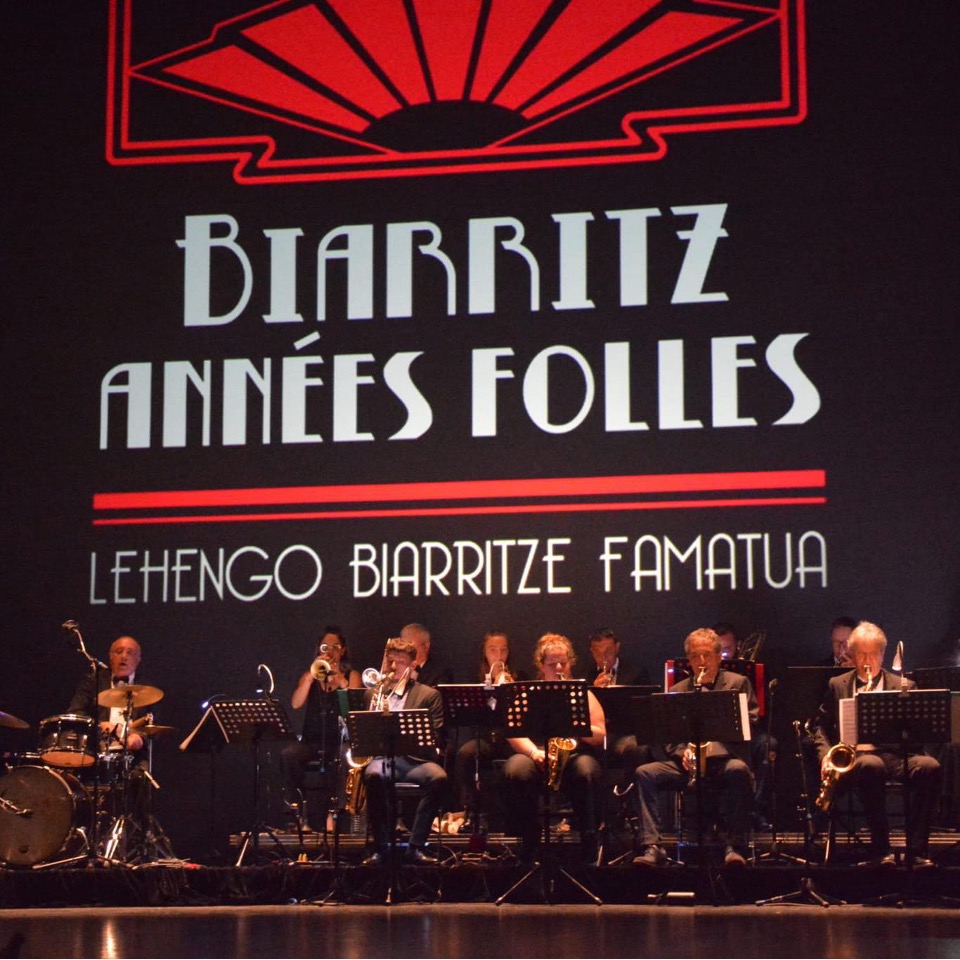
The show doesn’t stop at the Gare du Midi. Performances are due soon at the Lauga hall in Bayonne and in Pau — a tour that says something about the ambition of the project: to take Biarritz out of Biarritz, to carry this Basque memory all the way to the neighbouring Béarn.
There is, in what Serge Istèque has been doing for ten years now, a rare coherence. That of a man who believes that culture is not an ornament but a binding cement. That putting a hundred people on stage together is already a political act — in the noblest sense of the term. That the memory of a territory is not preserved in a display case but in bodies in motion, voices that sing, an audience holding its breath.
Papa Pourquoi ? The question remains open. But in Biarritz, on 25 May, the answer was in the room.
Zilbor
Portrait photo from Serge Istèque’s LinkedIn — performance photos from the Biarritz Années Folles Facebook page