
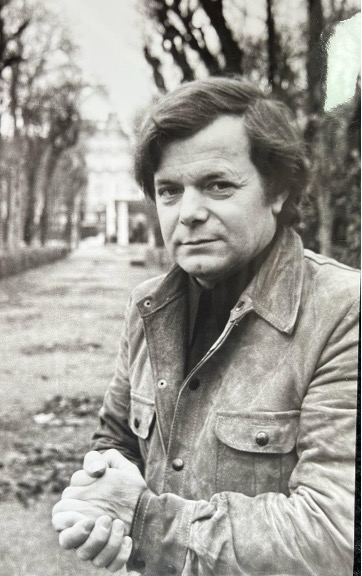
He was a son of the soil, but he chose bronze to speak to the world. Louis Derbré, born in the Mayenne into a farming family, raised French sculpture to the rank of the great voices of twentieth-century art. His monumental bronzes inhabit Tokyo, New York, Paris and Deauville. His daughter Mireille, based in Biarritz, today perpetuates his influence throughout the world and across the whole of Nouvelle-Aquitaine.
1. Mayenne roots: the child of Montenay
Louis Derbré was born on 16 November 1925 in Montenay, a small village in the Mayenne. His childhood passed between fields and stables, far from the Parisian galleries and artistic circles. After the Second World War, this twenty-year-old made his way to Paris, carrying in his luggage the robustness of his peasant ancestors and an insatiable curiosity for form.
He found work in an art publishing house where he rubbed shoulders with fine arts students. It was there, almost by chance, that he sculpted the stone bust of one of them. This first gesture earned him the Prix Fénéon in 1951, presented to him personally by Louis Aragon. His destiny was set.
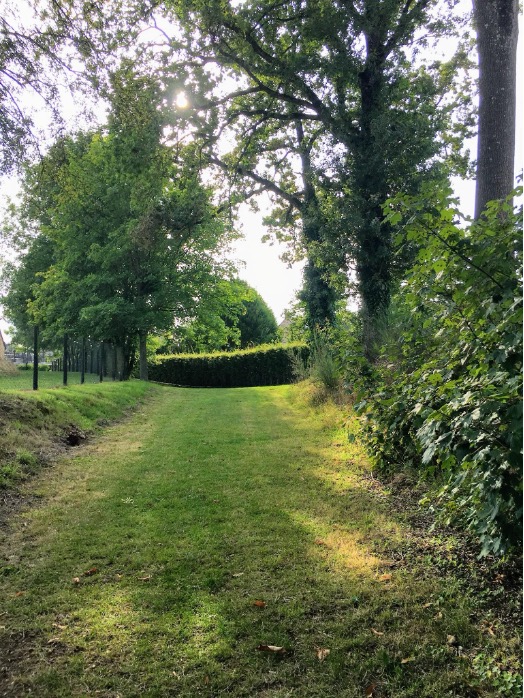
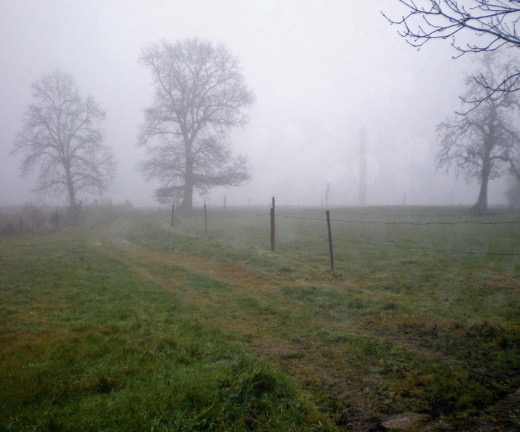
Montenay, Mayenne — Louis Derbré’s native land
2. The Parisian revelation: from Gilioli to glory
His distinction allowed Derbré to become assistant to the sculptor Emile Gilioli, a leading figure in French lyrical abstraction. He learned the secrets of the trade: clay, plaster, casting, bronze. But he quickly distanced himself from strict realism to find his own language — organic, carnal, vibrant.
Setting up his studio in Arcueil, in the Paris suburbs, marked a decisive step. There, as critic Pierre Mazars writes in the Journal Artcurial, he cast his own sculptures himself, surrounded by young companions he had trained. One is reminded of a country forge and a potter’s house: an atmosphere of total artisanal creation, a world away from the gallery scene.
In 1962, the Galerie Hervé Odermatt on the Avenue Matignon in Paris organised the landmark exhibition “Rodin, Maillol, Derbré”. Twenty-six works. Derbré, at forty, was placed alongside the two giants of modern French sculpture. The press hailed an artist whose forms elude all geometric rigour, radiating an organic power close to the vegetal.
“I sculpt first and foremost for my own pleasure. For my breathing — it is essential. And if said sculpture has spectators, that is already a dialogue with my environment.”
— Louis Derbré, interview, 1985
3. A philosophy of matter: “the dancing forest”
What strikes one about Derbré is the total absence of preparatory drawings on the walls of his studio. No sheets covered in notations or sketches. He created on instinct. Like the tree to which his sculptures are so often compared — the trunk, the branches hurling semaphore messages into space — his gesture was born of an inner impulse impossible to rationalise.
Pierre Mazars, in the Journal Artcurial, speaks of a “dancing forest”: figures that endure, hunch their backs, react with every part of their being, flexibly — like dancers. Derbré “scratches” at the material, refines it, achieves an ever-greater paring down, yet his instinct acts like a trigger the moment he reaches the edge of abstraction.
This way of being — in the material, with the material — irrigates his entire philosophy of art and life. He would say: “Art is not something that appears, but something that emerges, a little like a perfume.”
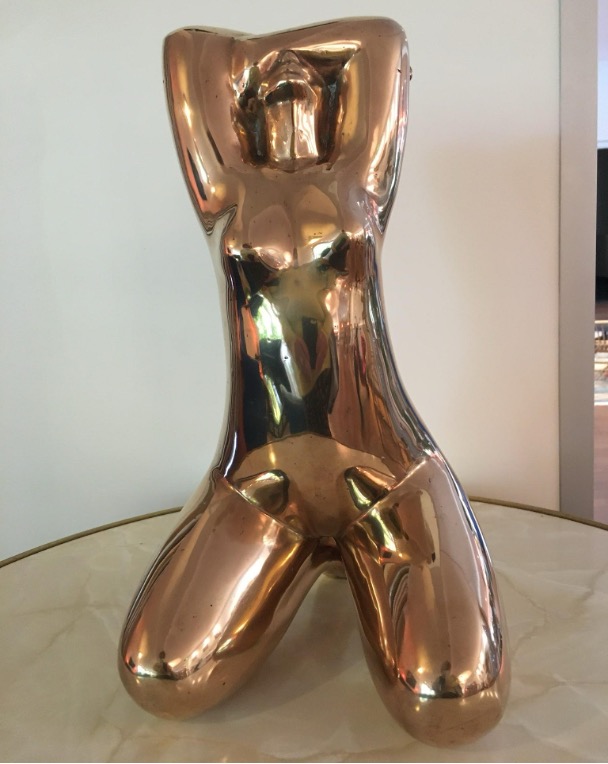
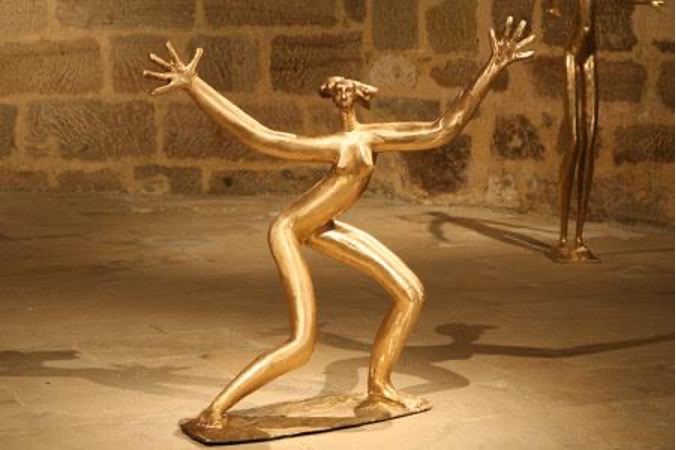
Louis Derbré, bronze — private collection
4. International conquest: Tokyo, New York, São Paulo
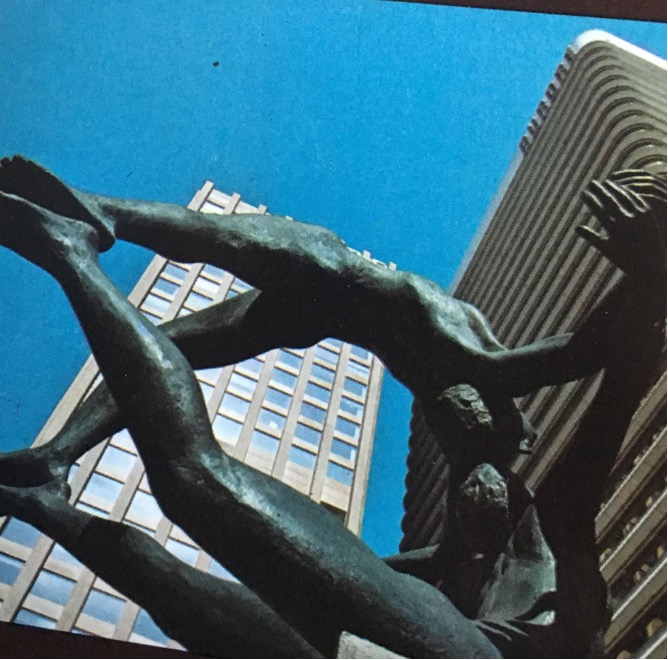
In the 1960s and 1970s, Derbré set out to conquer the world. In 1967 he exhibited in Montreal. In 1972 came the thunderclap: the Japanese group SEIBU commissioned “La Terre”, a monumental bronze 9 metres high intended to adorn Ikebukuro Square in Tokyo. The replica would be installed at the Place des Reflets at La Défense in Paris. This colossal work made him an international star.
Japan would hold a particular resonance for him. In 1973 he produced monumental works for the Nathan Cumming’s Hospital in New York, installed at Mount Sinai in Vermont. In 1974, a major exhibition was presented at the Musée Rodin in Paris — supreme consecration. Then São Paulo at the Museum of Modern Art, Tokyo again. His reputation had become international; he conquered every audience.
His exhibitions multiplied in Norway, Japan, Brazil, Lebanon, Ivory Coast — where a Carrara marble pietà was erected for the Blohorn family tomb at the Adjamé cemetery in Abidjan — Canada and the United States. In France, the Flo group purchased “La Terre” for the Brasserie La Coupole in Montparnasse, where it still stands today.
In 1976, Artcurial — the prestigious gallery on the Avenue Matignon — devoted a major exhibition to him. Derbré would exhibit there regularly until 1985, the year of a magnificent presentation of Carrara marbles selected on site in Italy. Major commissions followed, including the official portrait of President of the Republic Georges Pompidou.
5. Honours and distinctions
Official distinctions punctuated an exemplary career. In 1986, Louis Derbré was appointed Officer of Arts and Letters, a distinction presented by Professor Jean Hamburger. In September 1998 came the republican consecration: he was made a Knight of the Légion d’honneur by Senator René Ballayer at a reception in the Senate. The medal of Knight of the Order of Merit completed this honours list.
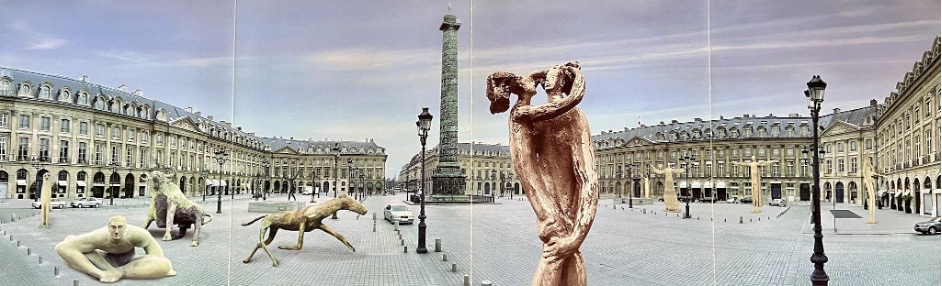
In 2000, the Vendôme committee chose his monumental works for a two-month exhibition in the Place Vendôme in Paris — 35 sculptures, around twenty of them 5 metres tall — offering thousands of passers-by an unprecedented dialogue between bronze and the stone of the City of Light.
6. The Peace Memorial in Japan: the work of a lifetime
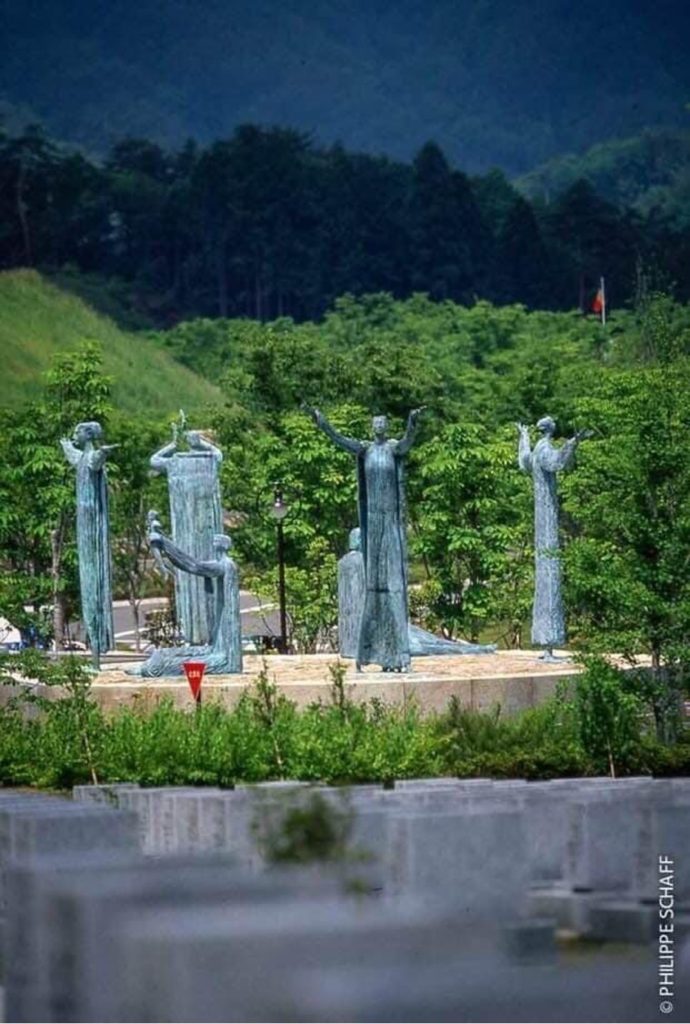
In 1997, Louis Derbré won the competition for the Peace Memorial near Hiroshima. A universal consecration. He erected six monumental sculptures 5 metres high, each symbolising a founding value: Construction, Joy, Future, Tolerance, Hope and Courage.
This Peace Memorial embodies the humanist ideal that runs through Derbré’s entire œuvre: the belief that sculpture can carry a message, cross cultural boundaries, speak to the universal. A sculptor from Mayenne in Japan — an adventure that alone sums up the astonishing destiny of this man of the earth who became a sculptor of the world.
7. The Prophet of Deauville: a titanic masterpiece
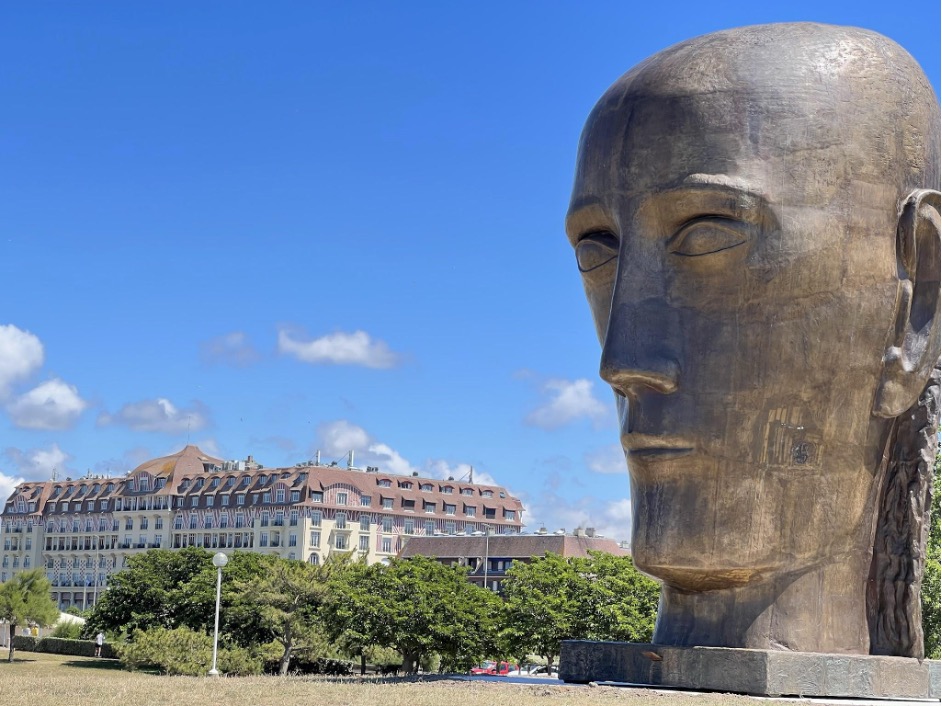
From 2003 to 2005, Louis Derbré worked on the most ambitious project of his career — long imagined, technically prodigious. “Le Prophète”: a monumental portrait 8 metres high and 14 tonnes of bronze. The work was divided into 138 pieces cast successively, then assembled by arc welding, like a bronze patchwork. A titanic undertaking for Derbré and the group of six apprentices alongside him.
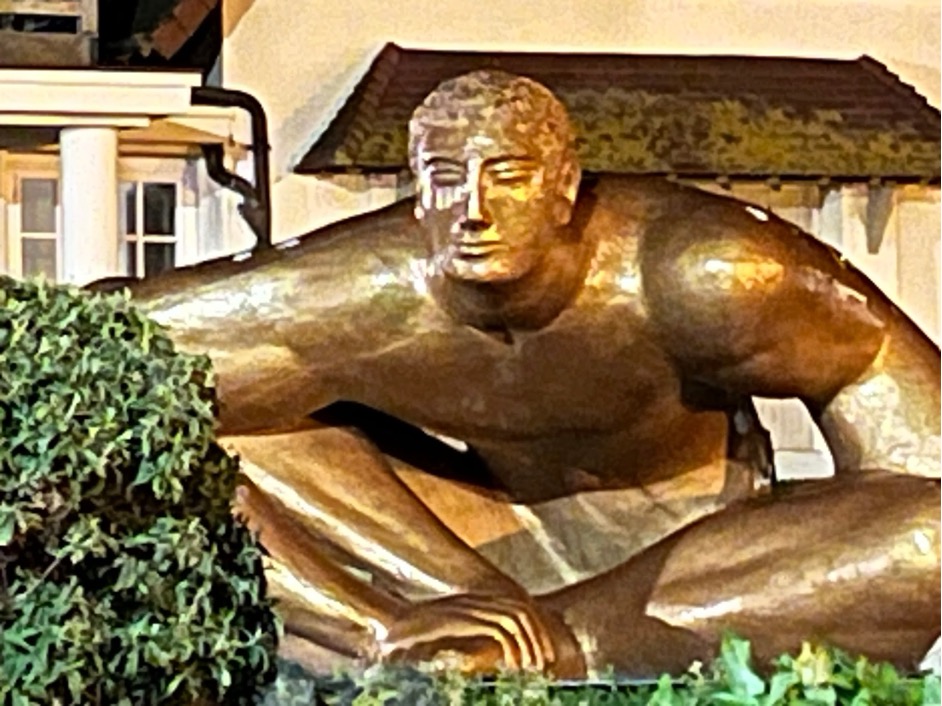
Completed in 2007, Le Prophète left the studio to be exhibited in Alençon, then in Paris in the Senate gardens at Luxembourg, in front of the Madeleine church. It finally found its permanent home in Deauville, facing the sea, alongside another major Derbré creation: “Le Guetteur”.
These two bronze silhouettes keep watch over the English Channel, facing the horizon. A striking image that alone sums up Derbré’s art: the human figure standing against immensity, inhabited by an inexhaustible presence.
8. A living legacy: museums, foundations and studios
Louis Derbré never forgot his native Mayenne. In 1991 he initiated the Espace culturel Louis Derbré around his studios in Ernée. This space has today become the Fonds de dotation Espace culturel Louis Derbré, which perpetuates his work in France and throughout the world.
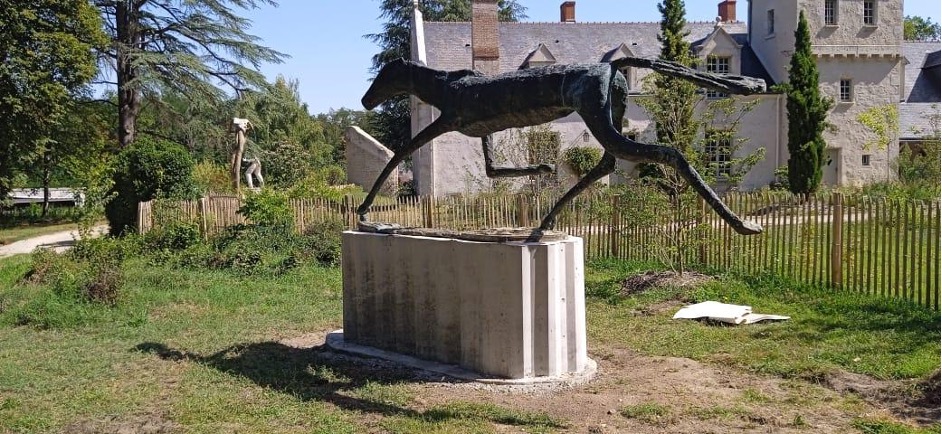
More recently, a musée-promenade Louis Derbré was created by a pair of patrons at the Château de Conon in Cellettes, fifteen minutes from Blois. A green setting where bronzes and stones enter into dialogue, inviting visitors to wander through the work.
9. Biarritz, heart of his influence: Mireille Darré Derbré in Nouvelle-Aquitaine
From Biarritz, Mireille Darré Derbré, daughter of the sculptor, champions her father’s work with conviction. She works actively towards its dissemination and discovery in France, internationally, in the Pays de la Loire, in Nouvelle-Aquitaine and in the Gironde. Her work brings a new audience — regulars of the Basque Country, summer visitors to the Côte d’Argent, art lovers from Bordeaux — into contact with this universe of bronze and light.
Initially rooted in the rural world of the Mayenne, Louis Derbré’s influence extends all the way to the Atlantic shore. A trajectory that says something essential about this extraordinary artist: he was at home everywhere, because his sculptures spoke to everyone.
“I will stop sculpting when I stop living. I will sculpt to the very end.”
— Louis Derbré
“Art is not something that appears, but something that emerges, a little like a perfume.”
— Louis Derbré

Where to discover Louis Derbré’s work?
| Deauville | “Le Prophète” (8 m) and “Le Guetteur” — permanent sculptures by the sea |
| Cellettes (41) | Musée-promenade Louis Derbré — Château de Conon, 15 min from Blois |
| Biarritz | Fonds de dotation Espace culturel Louis Derbré — conservation and dissemination collections |
| Paris | “La Terre” — Brasserie La Coupole, Montparnasse |
| Biarritz | Contact: Mireille Derbré — dissemination of the work in Nouvelle-Aquitaine and Gironde: mfdd007@gmail.com |